When should I change the air filter in my HVAC system
Changing the air filter in your HVAC system regularly ensures optimal performance and air quality. Generally, you should change your air filter every 1 to 3 months, depending on factors like usage and filter type.
Understanding the role of air filters
Air filters are critical components of HVAC systems, designed to trap dust, pollen, pet dander, and other particulate matter before it enters your home. This not only helps in maintaining indoor air quality but also protects the HVAC system itself from dirt buildup that can lead to inefficiencies and malfunctions. Hence, regular maintenance of these filters is essential for both health and energy efficiency.
Factors influencing filter change frequency
Several factors influence how often you need to change your air filter:
- Type of filter: Different filters have different lifespans. For instance, HEPA filters can last up to 6 months, while standard fiberglass filters may need changing every month.
- Home environment: If you live in an area prone to high pollen counts, or have pets that shed fur and dander, you might need to change your filter more frequently.
- HVAC usage: If your HVAC system is running continuously due to extreme temperatures, expect to change your filter more often.
- Allergies or health concerns: If anyone in your household has allergies or respiratory issues, more regular changes can significantly help in maintaining air quality.
Signs it’s time to change your air filter
Sometimes, visual checks and performance issues can indicate that your air filter needs changing:
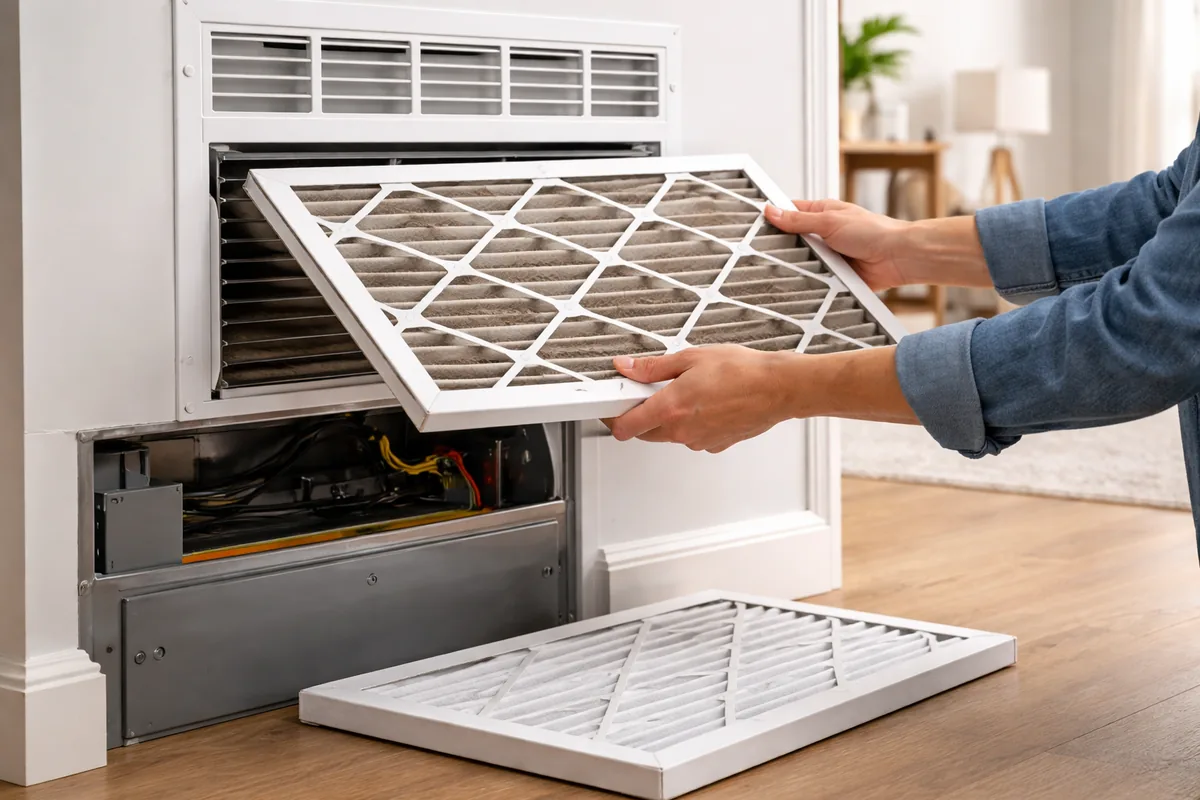
- Visible dirt and dust: If you can see a layer of dust on the filter, it's time for a change.
- Increased energy bills: A clogged filter can restrict airflow, forcing your HVAC system to work harder and consume more energy.
- Allergy symptoms at home: If family members are experiencing unexpected allergy symptoms, a dirty air filter might be the culprit.
- Foul odors: Musty smells can indicate a buildup of mold or mildew in the filter.
How to change your air filter
Changing your air filter is a simple process that requires minimal tools. Here is a straightforward guide to follow:
- Turn off your HVAC system to ensure safety.
- Locate the air filter, typically found in or near the air handler or furnace.
- Remove the old filter and inspect it for dust and damage.
- Insert the new filter in the correct direction, paying attention to the airflow arrows on the filter frame.
- Turn your HVAC system back on.
Choosing the right air filter
The market offers a variety of air filters. Choose wisely based on MERV (Minimum Efficiency Reporting Value) ratings. A higher MERV rating means better filtration, but may also restrict airflow if your system isn't designed for it. Here's a guideline to help you:
| MERV Rating | Filtration capabilities |
|---|---|
| 1-4 | Filters large particles; suitable for average homes |
| 5-8 | Filters smaller dust particles; better for allergy sufferers |
| 9-12 | High-efficiency; traps pollen and mold spores |
| 13-16 | Superior filtration; ideal for asthma and allergy sufferers |
The cost of neglecting filter changes
Failing to change your air filter can lead to a series of costs. For starters, it can significantly increase your energy bills, sometimes up to 15% higher. Moreover, neglecting maintenance can cause HVAC components to wear out prematurely, leading to costly repairs or the need for system replacement. Over time, the cumulative costs of these factors greatly outweigh the minimal expense of regularly changing your air filter.
Tips for remembering to change your air filter
Staying on top of air filter maintenance can be a challenge, but there are strategies to help you remember:
- Set a calendar reminder: Use your smartphone or a calendar app to remind you when it’s time for a change.
- Create a filter maintenance checklist: Keep a simple checklist near your HVAC system.
- Pair it with regular tasks: Change the filter when doing tasks like changing smoke detector batteries or seasonal home maintenance.
FAQ
What happens if I don’t change my air filter?
Not changing your air filter can lead to reduced airflow, increased energy consumption, HVAC malfunction, and poor indoor air quality.
How do I know what size filter I need?
The filter size is usually printed on the side of the existing filter or in your HVAC system's manual. Measure the dimensions if unsure.
Can I clean and reuse my air filter?
Some filters, like certain HEPA models, can be cleaned and reused, but most standard fiberglass filters are designed for single use.
Is it worth investing in a higher MERV-rated filter?
If you have allergies or respiratory issues, a higher MERV-rated filter can significantly improve air quality, but ensure your HVAC system can handle it.
How do I dispose of my old air filter?
Dispose of old air filters in your regular household waste. If it is particularly dirty, sealing it in a plastic bag can reduce the risk of spreading dust.