Do I need to reseal my granite countertops every year
Yes, resealing granite countertops is generally recommended every one to three years. However, the specific frequency can vary based on usage and exposure to stains and moisture.
Understanding granite countertops
Granite countertops are coveted for their beauty and durability. Composed of natural stone, they provide a wide range of colors and patterns, enhancing the aesthetic appeal of any kitchen or bathroom. Because granite is porous, it may absorb liquids and spills, leading to stains or bacterial growth if not properly maintained. Thus, understanding how to protect your investment is crucial.
What is sealing and why is it important?
Sealing is the process of applying a protective coating to granite surfaces. This coating fills the pores of the stone, inhibiting the absorption of liquids. This is vital because trapped moisture can not only cause staining but may also lead to mold growth. Sealing creates a barrier that allows for easier cleaning and increases the lifespan of your countertops.
Signs that your granite countertops need resealing
To determine if your granite countertops require resealing, there are a few signs you can look for. If water droplets remain on the surface for a few minutes without soaking in, your sealant is still effective. Conversely, if the water quickly absorbs and leaves dark spots, it’s time to reseal. Another indicator is if you notice any staining from spills that previously would not stain your countertops. Regular checks can help you maintain the integrity of the surface.
How often should you reseal your granite countertops?
The general guideline for resealing granite countertops is every one to two years. However, several factors can influence this frequency:
- Usage: If your countertops are heavily used for cooking and entertaining, you may need to seal them more frequently.
- Quality of sealant: Higher quality sealers often provide longer-lasting protection.
- Type of granite: Some granite varieties are more porous than others, requiring more frequent sealing.
To help you assess your specific needs, consider the following table summarizing typical resealing intervals based on different factors:
| Factor | Recommended resealing frequency |
|---|---|
| Light usage | Every 3 years |
| Moderate usage | Every 2 years |
| Heavy usage | Every 1 year |
The resealing process explained
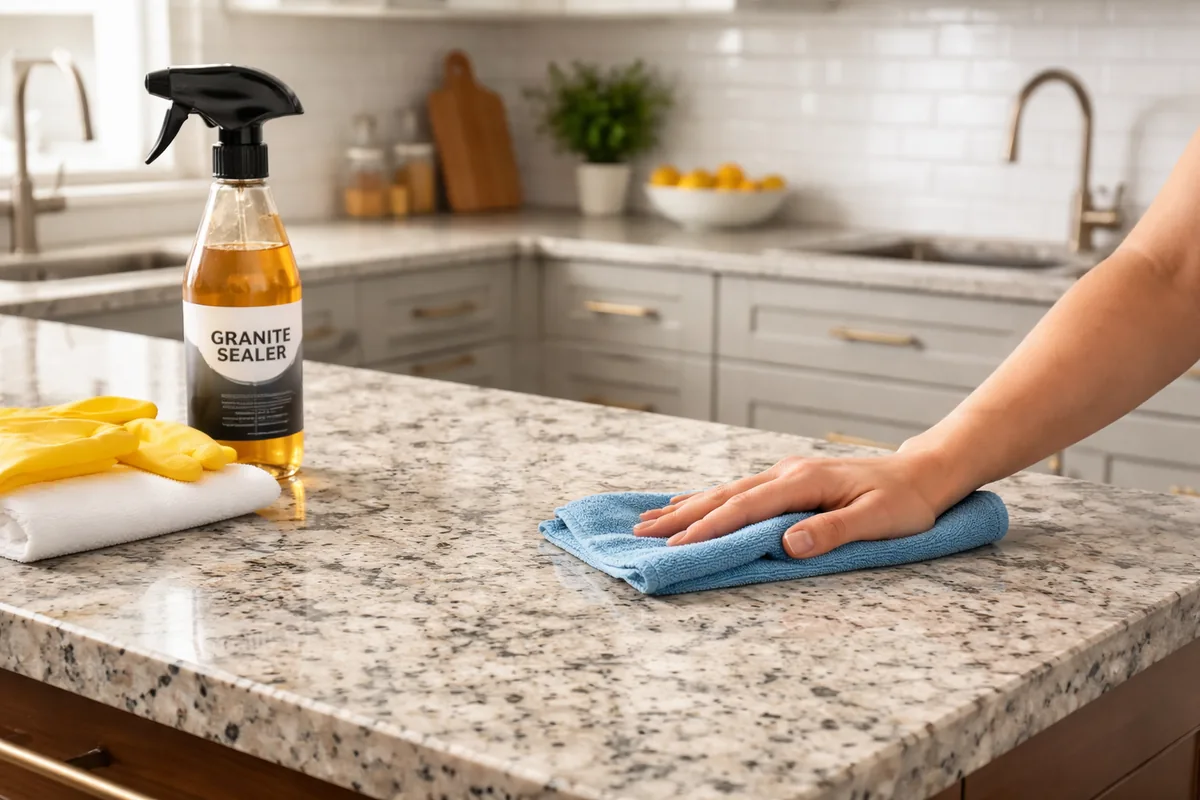
The resealing process typically involves several steps. Start with cleaning your countertops thoroughly using a pH-balanced stone cleaner. Then, dry the surface completely. Once clean, apply the sealant in a thin, even layer using a soft cloth or a brush. Allow the sealer to sit as directed by the product instructions before wiping away any excess. Finally, let the surface cure for the recommended time before resuming regular use. It’s important to follow manufacturer instructions to ensure effectiveness.
Choosing the right sealant for granite
Selecting the appropriate sealant is essential for effective protection. Various products are available on the market, from topical sealers to penetrating sealers. Topical sealers create a film on the surface but may require more frequent touch-ups. Penetrating sealers, on the other hand, penetrate the stone and offer longer-lasting protection. When choosing sealants, look for one specifically designed for natural stone, ensuring it’s non-toxic and food-safe for kitchen use.
Maintaining granite countertops between sealings
Regular maintenance between resealing sessions will help prolong the life of your granite countertops. This includes using a mild detergent for everyday cleaning and avoiding harsh chemicals that can degrade the sealant. Spills should be cleaned immediately to prevent absorption. Additionally, using coasters for beverages and cutting boards for food preparation can significantly minimize damage and staining.
Why professional help might be necessary
While resealing granite countertops is a manageable DIY task, enlisting professional help can ensure the job is done correctly. Professionals can assess the condition of your countertops and recommend the best sealant and application method for your specific surface. They can also provide deeper cleaning services that might be needed before resealing.
FAQ
Can I tell if my granite countertop is sealed?
Yes, by conducting a simple water test. If water beads on the surface, it is sealed. If it absorbs quickly, it needs resealing.
Does granite scratch easily?
Granite is generally scratch-resistant, but it can scratch under heavy use. Avoid using sharp objects directly on the surface.
Can I use vinegar to clean granite countertops?
No, vinegar is acidic and can damage the sealer and the stone. Stick to pH-balanced cleaners instead.
What happens if I don’t reseal my granite countertops?
Neglecting to reseal can lead to stains, discoloration, and damage to the granite's integrity over time.
Is sealing a DIY task or should I hire a professional?
Resealing is a task that many homeowners can do themselves, but hiring a professional ensures thorough cleaning and proper application.